


Welcome to Insights Corner. This series breaks down meaningful industry research and connects it to what we see firsthand working with UK dealerships every week.
McKinsey recently published a nine-page analysis on parts and service profitability. It is dense. It covers topics from technician shortages to BEV pressures to predictive analytics. But the strategic themes are clear, and many line up closely with what we hear on the ground.
Why this research matters right now
Margins in both new and used vehicle sales are under pressure, BEV adoption is growing, and customers are more selective. Every dealer we speak to is looking for stability. This is why fixed cost absorption and service profitability matter far more today than they did even two years ago. The McKinsey analysis gives a useful lens on where the real friction sits.
Here is a deeper breakdown of what the article really says and why it matters.
1. Service is becoming the stabilising force inside dealerships
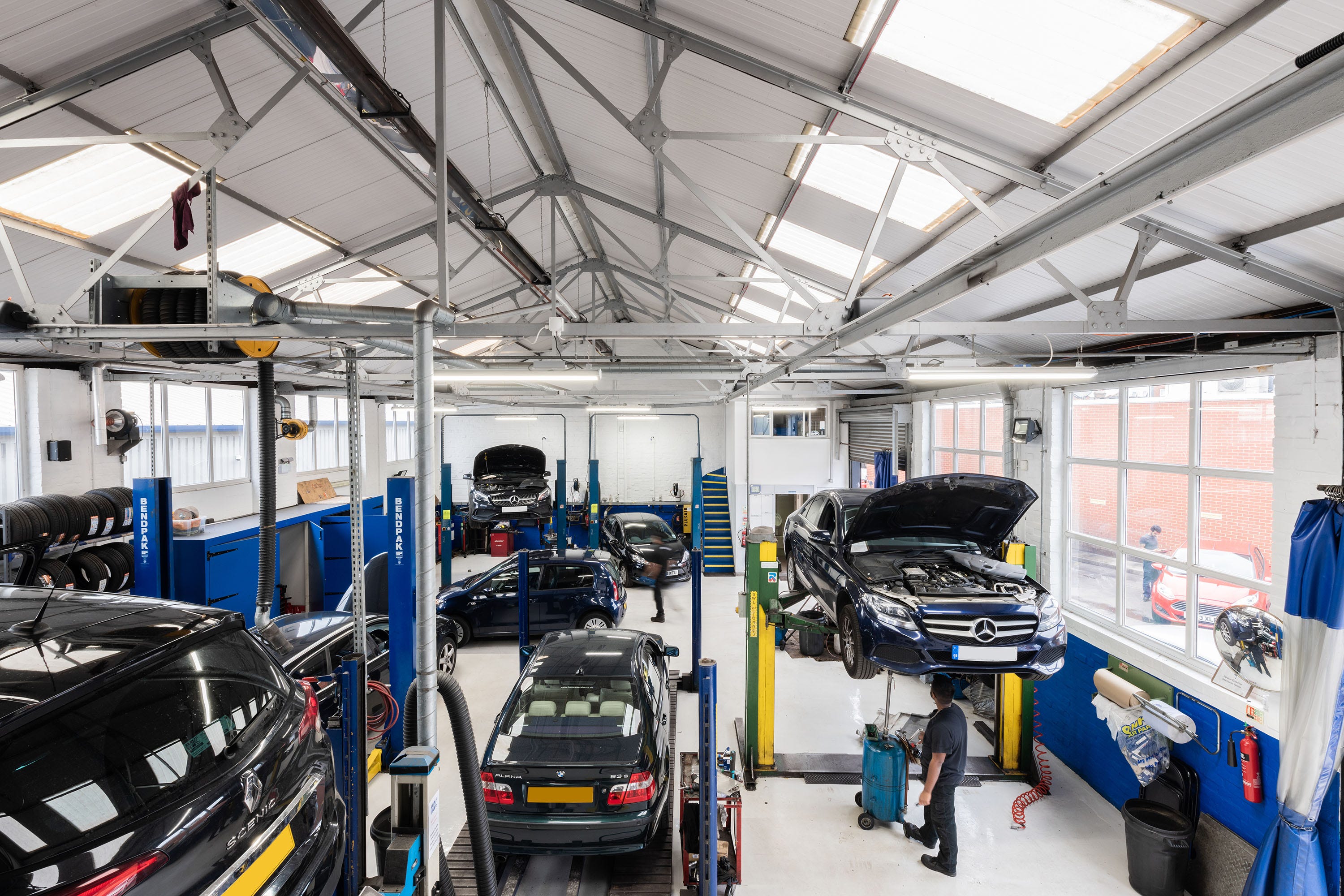
McKinsey highlights something that is being talked about more openly among industry leaders, but is still not fully internalised across many dealership groups.
Service is becoming the profit engine while sales margins become more volatile.
Key points:
• Service margins are consistently high at 45% to 55%
• Service demand remains resilient through downturns
• The car parc is growing and ageing
• Customers cannot postpone key repairs forever
In other words:
Service is the ballast. Sales is the sail.
For UK dealers, who face tighter used car margins and higher stocking costs, this is especially true.
2. Dealer fixed cost absorption has barely improved in five years
This is one of the most important findings in the article.
Public dealer groups in the US have stayed flat around 54% to 60% fixed cost absorption since 2020.
Private best-in-class players reach 80% to 100%.
The gap is massive.
McKinsey estimates that a single percentage point improvement in fixed cost absorption can add twenty to forty million dollars in profit for a large group.
It is not unrealistic to assume similar proportional gains for UK groups.
This is the heart of the issue:
Fixed cost absorption has not improved because processes around service have not changed.
3. Most lost revenue is not due to workshop capacity. It is leakage upstream.
This is where the article gets interesting.
McKinsey highlights three main barriers:
• Customer retention decays sharply with vehicle age
Share of customers using dealer workshops falls from roughly 50% to 60% in the first two years to as low as 4% to 13% by year fifteen.
That is a retention challenge, not a workshop challenge.
• BEVs and the long-term pressure on service volume
The report only touches briefly on BEVs, but the implications for service operations are significant. BEVs have fewer moving parts, fewer routine wear items, and no oil changes. Many common revenue-generating jobs simply do not exist in the same form.
At the same time, BEV repairs can be complex. Independent garages often lack the diagnostics, training, equipment, and safety processes required. This creates a short-term reliance on franchised dealers for high complexity repairs, even though the long-term volume of routine work is likely to fall.
With around 25% of new vehicles in the UK now BEV, this shift in the parc has a real impact on fixed cost absorption. Dealers will need to capture a higher share of the remaining work and protect retention more aggressively to maintain profitability.
The important point in the BEV shift is not only the change in maintenance needs. It is how this affects the economic model of a dealership. If routine work declines, fixed costs do not shrink automatically. Labour, buildings, equipment, energy costs, and admin all remain. This means dealers must capture a larger share of the remaining work and extract more value per interaction to maintain healthy absorption rates.
• Technician shortages limit throughput
A persistent workforce gap slows growth and reduces available labour hours.
• Industry shifts are putting pressure on sales margins
Higher supply, BEVs, and financing challenges all push dealers to rely more on service to stay profitable.
None of this is surprising.
What is surprising is the level of lost potential that still sits untouched.
4. The biggest opportunities sit in three areas: volume, throughput, and revenue per RO
McKinsey is very explicit here.
A. Volume growth
Not from demand generation, but from:
• better appointment availability
• personalised outreach
• better retention of mid-life vehicles
• more flexible scheduling
• multiple sites or bays in a group
B. Throughput optimisation
This is where a lot of UK dealers struggle.
Workflow optimisation includes:
• technician matching
• predictive staffing
• better parts availability
• express lane configuration
• smoother work allocation
• paperless RO processes
• fewer desk bottlenecks
C. Higher revenue per RO
McKinsey pushes three levers:
• better diagnostics
• faster multipoint inspections
• predictive parts inventory
These seem operational or technical, but they are all fundamentally dependent on the customer reaching the service department cleanly and reliably.
5. The article leans heavily on data and automation, but the message is deeper
McKinsey mentions ‘gen AI’ and ‘predictive analytics’ several times.
But the underlying message is simpler:
Dealership profitability hinges on the ability to reduce friction in the service journey.
That friction begins:
• when the customer tries to contact the dealer
• when the appointment is scheduled
• when availability is unclear
• when the phone rings out
• when messages wait too long
• when the process feels slow
The workshop cannot fix these upstream delays.
Service advisors cannot fix them alone.
Tools built ten years ago cannot fix them either.
This is the untapped opportunity.
The UK context amplifies these trends
The UK parc is ageing, MOT requirements bring predictable spikes in service activity, and BEV adoption has accelerated faster than many other markets. UK independents are slower to invest in BEV diagnostics and training, which keeps early BEV repair complexity inside franchised networks. These local factors make the lessons from the research even more relevant to UK operators.
How Ombox connects to this
The reason this study resonated with us is simple.
Every friction McKinsey describes starts with the first interaction between customers and dealerships. That first thirty to sixty seconds often decides:
• whether the customer books
• whether the RO exists
• whether additional work can be approved
• whether the customer returns next year
• whether retention improves
We are building Ombox to fix that moment.
A clean, reliable first step that reduces leakage and keeps service running smoothly.
If you want to test the experience hands-on:
+44 113 519 7877
More Insights Corner posts coming soon as we continue to analyse the industry and share what we learn from real dealership pilots every week.